
Resin Bonded Diamond and CBN Wheels: Features, Benefits and Applications

Introduction
In today's precision manufacturing environment, grinding performance directly impacts product quality, productivity, and operating costs. Among the various superabrasive grinding solutions available, Resin Bonded Diamond and CBN Wheels are widely recognized for their excellent cutting performance, superior surface finish, and versatility across a broad range of grinding applications.
Whether used for carbide tool manufacturing, HSS tool sharpening, precision engineering, or production grinding, resin bonded wheels continue to be one of the most preferred solutions in modern grinding operations.
This article explores the construction, advantages, applications, and selection considerations for Resin Bonded Diamond and CBN Wheels.
What are Resin Bonded Diamond and CBN Wheels?
Resin bonded grinding wheels use synthetic resin as the bonding material to hold Diamond or CBN abrasive grains together.
The bond structure is designed to provide controlled abrasive release, allowing fresh cutting edges to be continuously exposed during grinding. This results in a free-cutting action, lower grinding forces, and improved surface finish.
Diamond Wheels
Diamond abrasive is primarily used for:
Tungsten Carbide
Ceramics
Glass
Quartz
Composite Materials
PCD Tools
Thermal Spray Coatings
CBN Wheels
CBN abrasive is ideal for:
High-Speed Steel (HSS)
Tool Steel
Hardened Steel
Bearing Steel
Alloy Steel
Ferrous Materials
Why Choose Resin Bonded Wheels?
Resin bond technology offers a unique combination of cutting efficiency and finishing capability.
Compared to other bond systems, resin bonded wheels provide:
Smooth grinding action
Reduced heat generation
Superior surface finish
Lower grinding pressure
High dimensional accuracy
Cost-effective performance
These advantages make resin bond wheels suitable for both tool room and production environments.
Key Features of Resin Bonded Wheels
Excellent Surface Finish
The flexible nature of the resin bond helps produce smoother surfaces and improved edge quality.
Cool Cutting Performance
Lower grinding temperatures reduce the risk of thermal damage and workpiece burning.
Free Cutting Action
The bond continuously exposes fresh abrasive grains, maintaining cutting efficiency.
Reduced Grinding Forces
Lower cutting resistance helps minimize machine load and improve process stability.
Easy Dressing
Resin bond wheels are relatively easy to dress and maintain compared to harder bond systems.
Applications of Resin Bonded Diamond Wheels
Resin Bonded Diamond Wheels are extensively used in industries where carbide and non-ferrous materials require high precision grinding.
Common Applications
Carbide Tool Manufacturing
Carbide End Mill Grinding
Carbide Insert Grinding
Woodworking Tool Sharpening
Ceramic Component Grinding
Glass Processing
PCD Tool Manufacturing
Surface Grinding
These wheels provide excellent edge retention and surface quality on hard and brittle materials.
Applications of Resin Bonded CBN Wheels
Resin Bonded CBN Wheels are specifically designed for grinding ferrous materials.
Common Applications
HSS Tool Sharpening
Drill Manufacturing
Reamer Grinding
Broach Grinding
Tool & Cutter Grinding
Bearing Component Grinding
Hardened Steel Grinding
Cylindrical Grinding
CBN wheels help maintain precision while delivering longer wheel life and consistent grinding performance.
Benefits of Resin Bonded Diamond & CBN Wheels
Superior Surface Quality
Ideal for finishing operations where surface finish is critical.
Increased Productivity
Free-cutting action reduces grinding cycle times.
Improved Tool Life
Efficient cutting reduces excessive wheel wear.
Reduced Thermal Damage
Lower heat generation protects sensitive workpiece materials.
Cost-Effective Grinding
Provides an excellent balance between performance and operating cost.
Resin Bond vs Other Bond Types
Feature | Resin Bond | Vitrified Bond | Hybrid Bond | Metal Bond |
Surface Finish | Excellent | Excellent | Very Good | Good |
Grinding Speed | Good | Good | High | High |
Wheel Life | Good | Very High | Very High | Excellent |
Cool Cutting | Excellent | Good | Very Good | Moderate |
Dressing Ease | Easy | Moderate | Moderate | Difficult |
Cost Efficiency | High | Moderate | Moderate | Moderate |
Resin bond wheels are often selected when surface finish and precision are more important than maximum stock removal.
How to Select the Right Resin Bond Wheel
Several factors should be considered:
Workpiece Material
Choose Diamond for carbide and non-ferrous materials.Choose CBN for steel and ferrous materials.
Grit Size
Fine grits provide superior finish.Coarse grits provide higher stock removal.
Concentration
Higher concentration improves wheel life and profile retention.Lower concentration provides freer cutting action.
Grinding Application
Tool grinding, surface grinding, cylindrical grinding, and profile grinding may require different wheel specifications.
Why Choose Eurogrind Superabrasives?
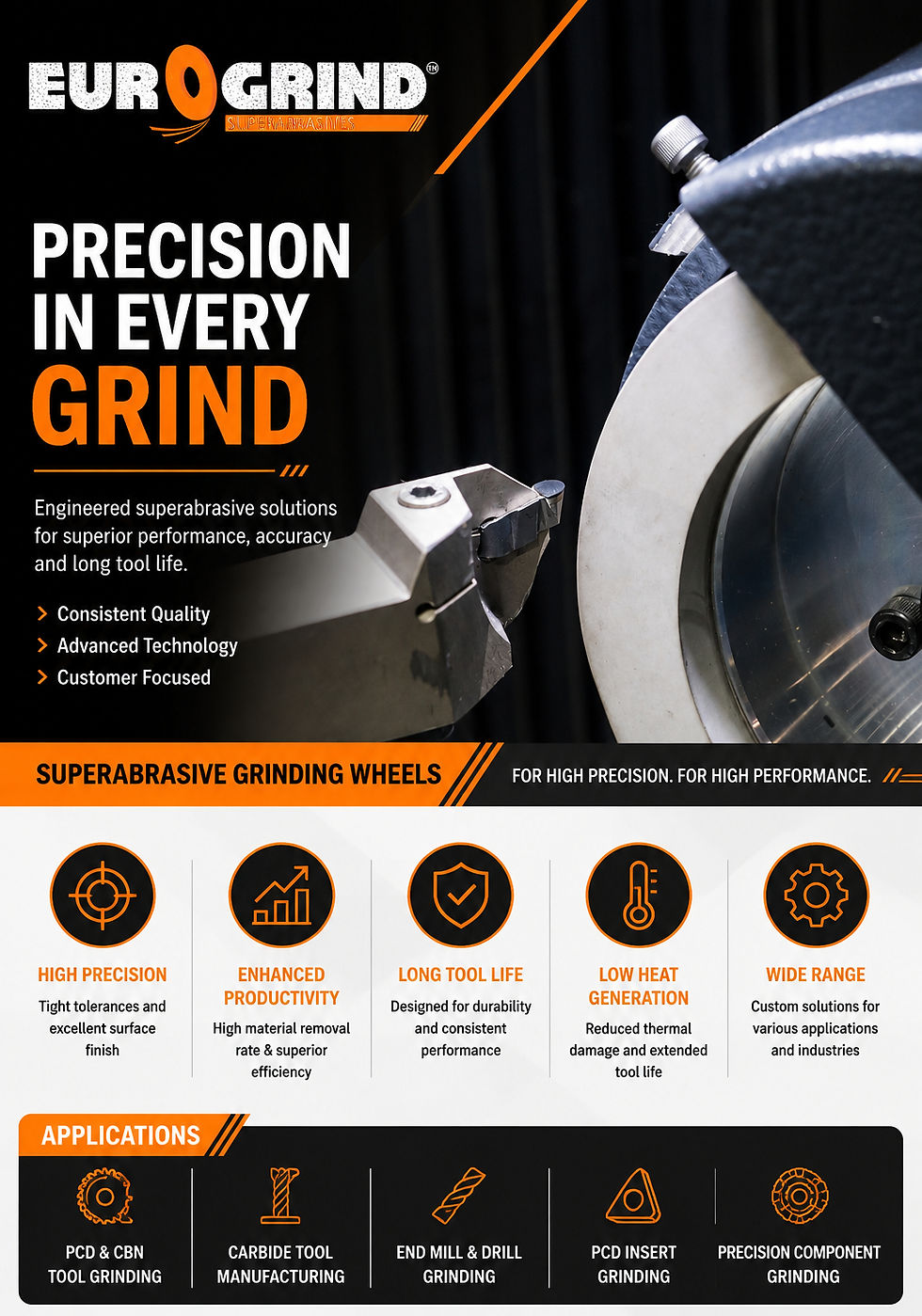
With decades of experience in superabrasive technology, Eurogrind Superabrasives manufactures customized Resin Bonded Diamond and CBN Wheels engineered for demanding industrial applications.
Our capabilities include:
Resin Bond Diamond Wheels
Resin Bond CBN Wheels
Tool & Cutter Grinding Wheels
Carbide Grinding Solutions
HSS Grinding Solutions
Customized Grinding Wheels
CNC Tool Grinding Applications
Every wheel is designed to deliver maximum precision, productivity, and reliability.
Conclusion
Resin Bonded Diamond and CBN Wheels remain one of the most versatile and widely used grinding solutions in the industry.
Their ability to provide excellent surface finish, cool grinding action, reduced grinding forces, and cost-effective performance makes them ideal for a wide range of carbide, HSS, and precision grinding applications.
Whether you are manufacturing cutting tools, sharpening HSS drills, grinding carbide inserts, or producing high-precision components, selecting the right Resin Bonded Wheel can significantly improve productivity, quality, and wheel life.


Comments