
The Future of Cutting Tools: CVD Diamond vs PCD Tools in Modern Manufacturing
Introduction
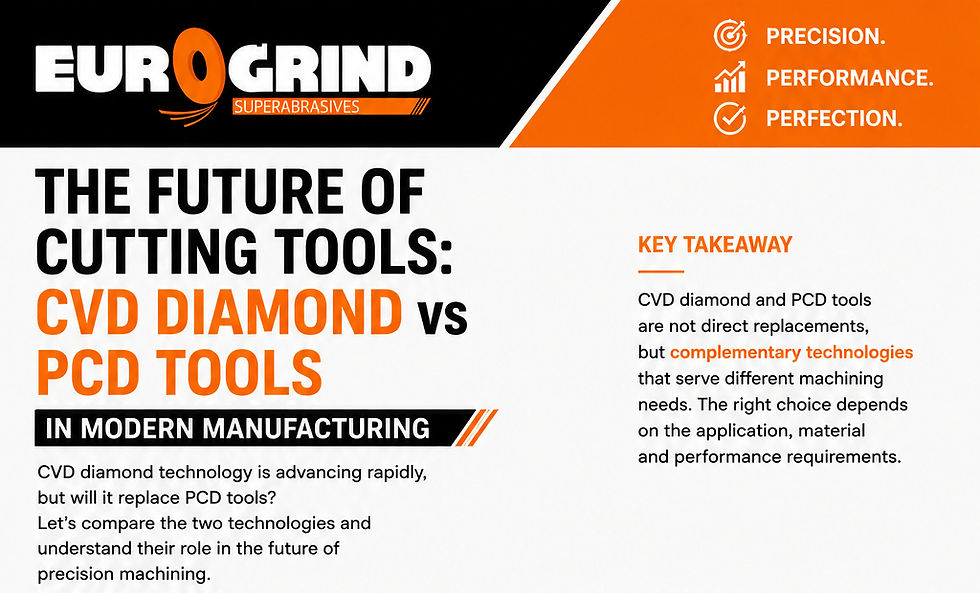
The cutting tool industry is continuously evolving as manufacturers seek higher productivity, longer tool life, and improved machining performance. One question frequently discussed among tooling professionals is: Will CVD diamond tools replace PCD tools?
While CVD (Chemical Vapor Deposition) diamond technology offers several unique advantages, PCD (Polycrystalline Diamond) tools continue to dominate many industrial applications. Understanding the strengths and limitations of both technologies helps manufacturers select the most suitable solution for their machining requirements.
Understanding PCD Tools
PCD tools are manufactured by sintering micron-sized diamond particles under high pressure and temperature onto a carbide substrate. They are widely used for machining:
Aluminum alloys
Copper and brass
Graphite
Carbon fiber composites
Wood-based materials
Non-ferrous metals
PCD tools are known for:
Exceptional wear resistance
Long tool life
High cutting speeds
Consistent performance
Cost-effective production
What Are CVD Diamond Tools?
CVD diamond tools utilize a pure synthetic diamond layer grown through a chemical vapor deposition process. Unlike PCD, CVD diamond contains minimal binder material, resulting in an extremely high-purity diamond structure.
CVD diamond tools are often used in:
Graphite machining
Aerospace composites
High-silicon aluminum alloys
Ceramic materials
Advanced composite components
Advantages of CVD Diamond Tools
Higher Diamond Purity
The absence of metallic binders provides exceptional hardness and wear resistance.
Superior Edge Sharpness
CVD diamond can achieve extremely sharp cutting edges, making it suitable for precision machining applications.
Excellent Surface Finish
The ultra-hard diamond structure helps produce superior workpiece finishes.
Enhanced Performance in Composite Materials
CVD tools perform exceptionally well in abrasive composite machining operations.
Why PCD Tools Still Dominate
Despite the advantages of CVD diamond, PCD tools continue to be the preferred choice for many manufacturers due to several practical benefits.
Better Toughness
PCD tools generally offer higher fracture toughness, making them suitable for a wider range of machining conditions.
Cost Efficiency
PCD tooling is often more economical for large-scale production environments.
Established Manufacturing Processes
PCD tool production and reconditioning technologies are mature and widely available.
Broad Application Range
PCD tools successfully handle diverse materials and machining operations across multiple industries.
Will CVD Diamond Replace PCD?
The short answer is not entirely.
Rather than replacing PCD tools, CVD diamond is expected to complement existing tooling technologies. Each material offers unique advantages depending on the application.
CVD diamond tools are likely to gain market share in specialized applications requiring:
Ultra-precision machining
Advanced composite processing
High-purity diamond cutting edges
Extreme wear resistance
Meanwhile, PCD tools will remain the preferred solution for many general industrial machining operations due to their proven performance, toughness, and cost-effectiveness.
The Role of Precision Grinding Technology
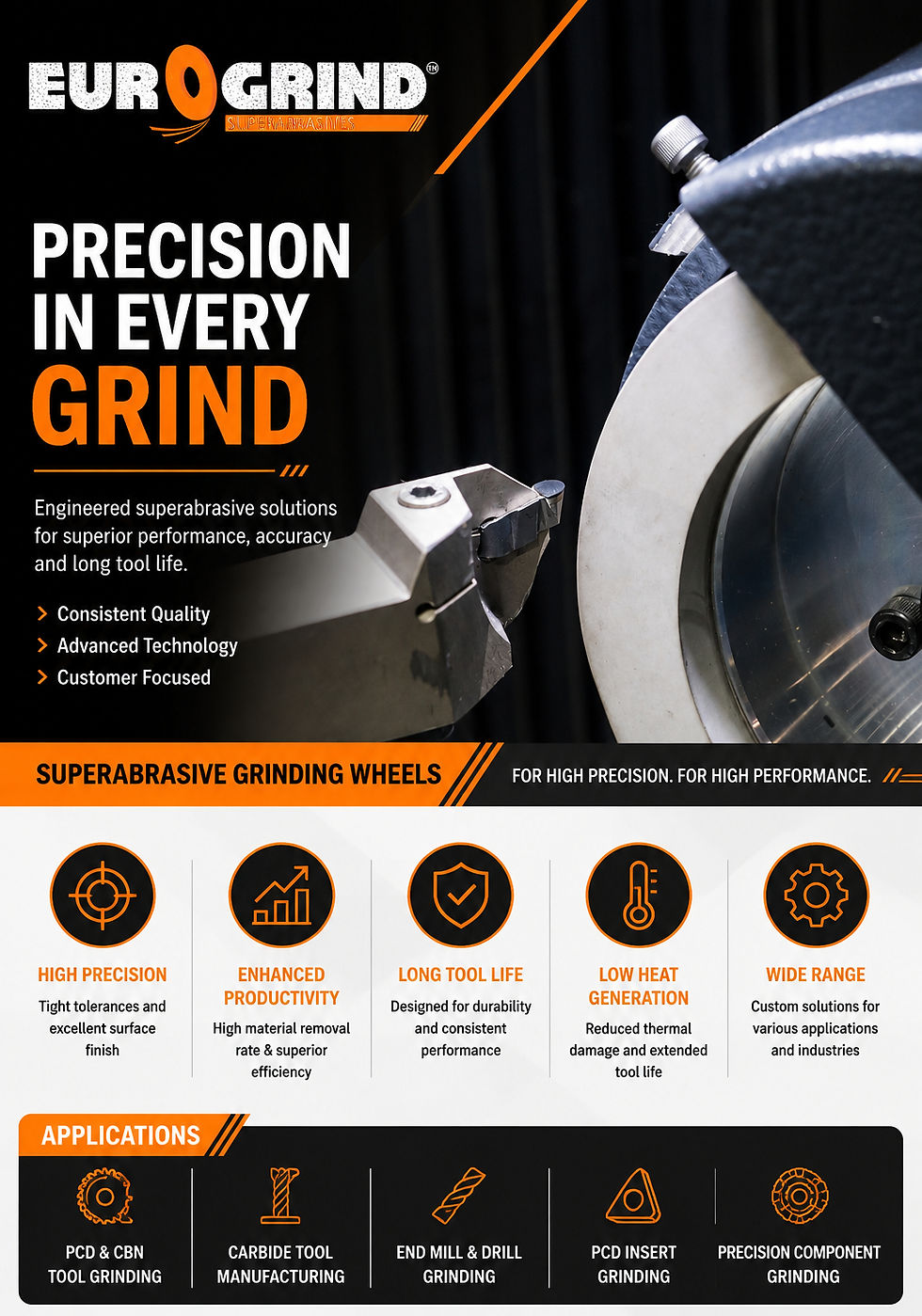
As both PCD and CVD diamond tools become increasingly sophisticated, precision grinding technology plays a critical role in tool manufacturing.
Advanced diamond grinding wheels are required for:
Tool edge preparation
Profile generation
Tool sharpening
Reconditioning operations
Surface finish optimization
High-performance vitrified and resin bond diamond grinding wheels help manufacturers achieve the accuracy and consistency demanded by modern cutting tools.
Conclusion
CVD diamond tools represent an exciting advancement in cutting tool technology, particularly for demanding composite and precision machining applications. However, PCD tools continue to offer an outstanding balance of performance, durability, and economic value.
Rather than replacing PCD tools, CVD diamond technology is expected to expand the range of available tooling solutions, allowing manufacturers to choose the optimal tool material for specific machining challenges.
As cutting tool technology advances, precision grinding solutions from Eurogrind Superabrasives help tool manufacturers achieve superior quality, productivity, and performance in both PCD and CVD diamond tool production.


Comments